
Shaving Years Off the Productivity Paradox
/Executives are convinced that organizations leveraging AI are more productive. The revenue and employment numbers mostly disagree. A March 2026 working paper from the National Bureau of Economic Research surveyed nearly 750 executives and found that the productivity gains leaders perceive from AI are substantially larger than those offered by the data. The authors give it an old name, the productivity paradox, and trace it back to Nobel Laureate Robert Solow's 1987 comment, "You can see the computer age everywhere but in the productivity statistics." Why are we again confronted with the productivity paradox with AI?
It's a work and organization redesign lag, not just a timing lag
The economists who ran that survey lean toward a timing story. The gains are real, they say, and will show up in the measured numbers with a lag. I think that is part of it, but only part. Prior research indicates the lag is mostly due to organizational redesign, not just the parachuting in of a technology. Choosing to redesign the work, not just install the technology, is how we shave years off the AI productivity paradox
The economic historian Paul David demonstrated the power of redesign based on the introduction of electricity. Electricity reached factories in the 1880s, but the big productivity gains did not arrive until the 1920s, roughly forty years later. Early implementations removed the steam engine, installed a single large electric motor, and kept the same overhead shafts and belts. Productivity barely moved. The gains came only when each machine got its own motor and the whole factory was rebuilt around the work, single story and laid out by the flow of the job. The payoff was in the redesign, not the motor alone.
Enterprise IT repeated the pattern on a shorter clock. Heavy computer investment ran from the 1970s into the early 1990s with flat productivity, and the payoff arrived in the late 1990s once firms reorganized around the technology. Erik Brynjolfsson and Lorin Hitt found that the organizational changes that made IT pay could cost an order of magnitude more than the technology itself, but those changes led to long-term, far-reaching improvements.
Firms that redesign as they implement AI gain. Consider McKinsey's 2025 State of AI survey. Only 39% of organizations report any enterprise-level profit impact from AI. Only about 6% of those using AI qualify as high performers, and those high performers are nearly three times as likely to have fundamentally redesigned their workflows. Organizational redesign is the variable that separates the winners.
Today is the first time I’ve viewed the redesign process as a 5T event in itself
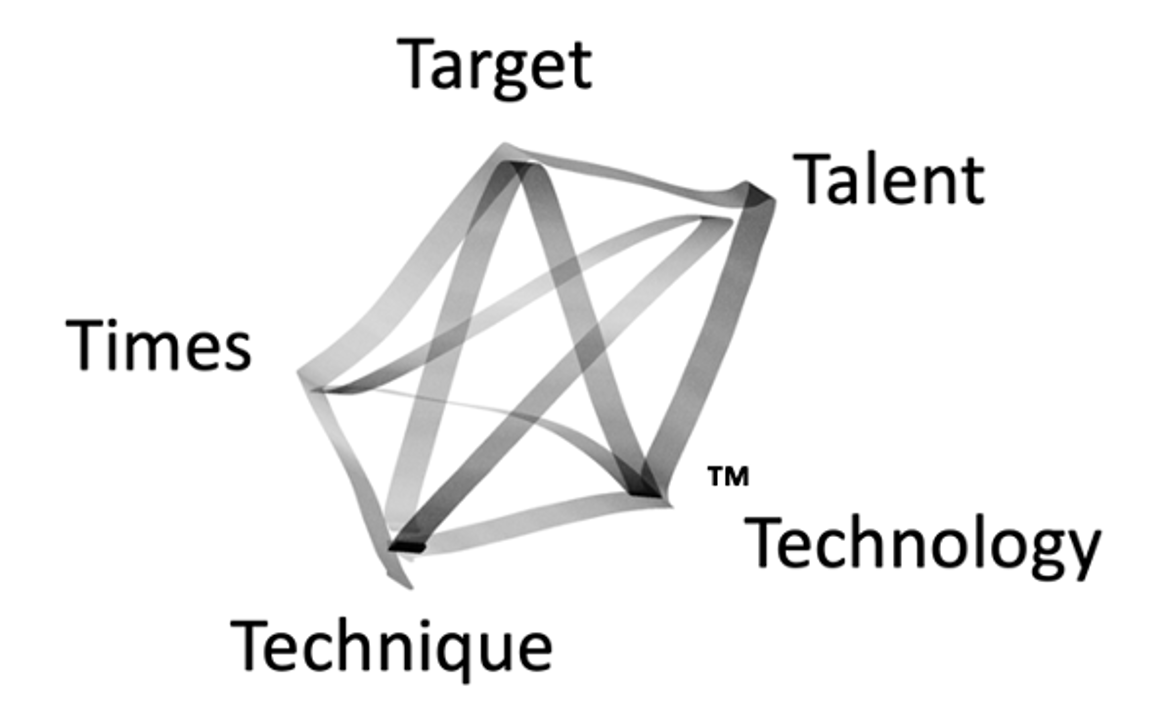
If you have heard me speak, attended one of my corporate workshops, or joined me for a course, you’ve heard about Thinking in 5T. Based on 70+ years of my field’s consideration of sociotechnical systems, I highlight that change should start with a Target and an understanding of the Times. Then the change focuses on managing across the Talent, Technology, and Technique in concert.
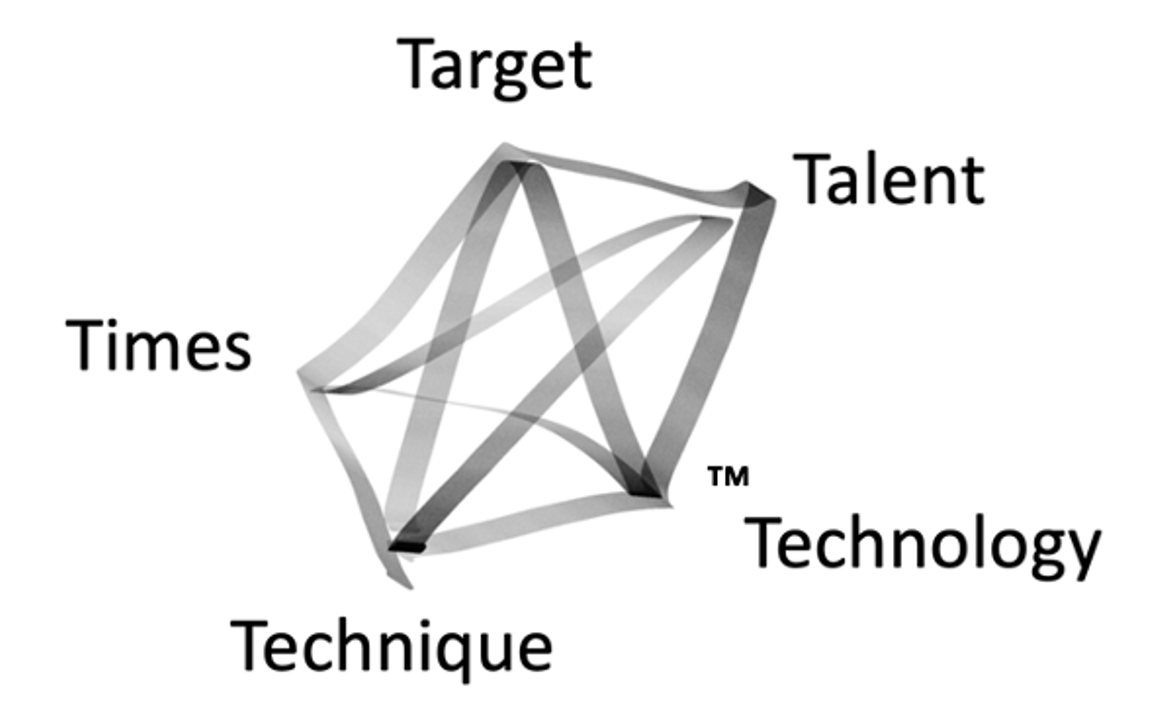
Consider who has to solve the productivity paradox. The Technology starts with technical scientists, the people who build the models and the products. The Talent, the human and behavioral side of the adopters, leaders, and users, is the home ground of social scientists (yes, I acknowledge the talent of the technical folks, see my 1999 piece, but simplifying here). The Technique, how work is actually structured and done, belongs to organizational scientists and the practitioners living inside real workflows. The Talent, Technology, and Technique must align with the Target and the Times.
However, each of these communities is fluent in one T and may treat that one T as a silver bullet. (The bias toward silver bullets is why my colleagues and I work on measuring and improving individual systems savvy, a solution to silver bullet thinking.) From Frederick Brooks (1986), noting that there are no silver bullets:
There is no single development, in either technology or management technique, which by itself promises even one order-of-magnitude improvement within a decade in productivity, in reliability, in simplicity.
Let’s shave years off the productivity paradox
Technical, social, and organizational science, plus practice leaders: if we work the problem together rather than separately, we can take years off the AI productivity lag. The fastest route to real-world gains runs through our innovating together.
Our Target is a shared payoff. Individuals are seeing productivity gains even if organizations see less. It’s easier to craft your personal work than to redesign an organization. Our Times, always plural, are urgent if recent layoffs are taken seriously. I worry that those cuts are short-sighted rather than the result of thoughtful redesign.
Electrification took forty years because the redesign was delayed. We can’t wait. Technical, social, and organizational scientists, plus practice leaders, must come together to focus on the whole organization in an AI-empowered world rather than individual workflows.
Disclosures: I leverage every AI tool I can get my hands on as I write these posts, many of them on paid accounts and some with persistent memory.